
Will BJP campaigners start using the term 'Ram Rajya' to refer to the nation under Modi's rule, asks N Sathiya Moorthy.
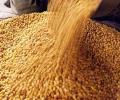
Chana is majorly imported from Australia and Tanzania and it attracts an import duty of 60 per cent. A section of the traders is demanding a reduction in import duty to around 35-40 per cent to tide over any shortage of the commodity as the new crop will start hitting the market only around mid-February.

'I'm pitching India for the strengths we offer, including the English language, engineers, doctors, nurses, professionals, innovative talent of startups.'
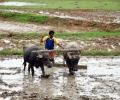
According to latest data, crops have been sown in around 72.13 million hectares, which is 8.90 per cent less than the same period last year.

Market players said the new norms were more suited for online brokers, where clients were typically internet savvy.

The Reserve Bank is likely to maintain status-quo on the key interest rates for the third time in a row in its upcoming bi-monthly policy review despite the US Federal Reserve and the European Central Bank hiking benchmark rates, as domestic inflation is within the RBI's comfort zone, say experts. The borrowing cost which started rising in May last year has stabilised with RBI keeping the repo rate unchanged at 6.5 per cent since February when it was raised from 6.25 per cent. In the previous two bi-monthly policy reviews in April and June the benchmark rate was retained.
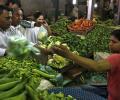
Retail inflation dropped marginally to 7.01 per cent in June mainly due to slight easing in prices of vegetables and pulses, though it still remained above the Reserve Bank's comfort level for the sixth month in a row. The consumer price index (CPI) based inflation stood at 7.04 per cent in the preceding month of May and 6.26 per cent in June 2021. Inflation in the food basket in June 2022 was 7.75 per cent, compared to 7.97 per cent in the previous month, as per the National Statistical Office (NSO) data released on Tuesday.

In the coming few weeks, agriculture markets in North and Central India will be full of wheat, mustard, and chana - the three main rabi crops grown in these parts. Not only will the price trajectory of these determine the course of food inflation in the months to come, but it could also have a wider impact on the rural economy in the main growing states for these crops. Wheat and chana are largely grown in Madhya Pradesh (MP).

RBI has, since January, cut its policy rate four times.
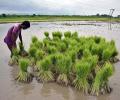
The area under paddy - the biggest foodgrain during the kharif season - was almost 13 per cent lower in the week ended August 5 as compared to the same period last year despite a slight pick-up in rains in the main growing regions, triggering fears of a 10-12 million-tonne drop in final output. Sources said with the peak sowing season for paddy almost coming to an end in the big-growing states, any uptick in coverage from here onwards may not give the desired yields. With 30 per cent of normal average area in which paddy is grown every year remaining unsown till early August, there is a limited chance of a big uptick in output, trade and market sources said.

The Russia-Ukraine crisis, along with general bullishness in agricultural commodities, has ensured that after a fairly long time, most of the 24 commodities for which the Centre declares the minimum support price (MSP) are trading above it. The exceptions here are chana or gram and a few varieties of pulses. This might gladden the farmers, especially those who are still holding on to their stocks from the previous kharif harvest or are harvesting the latest rabi crop. But this could stoke retail and wholesale inflation.

Here are some fantastic cars that will make you drool...

He is currently on a two-day swing to the crucial State of Iowa. On January 15, Iowa would kick off the 2024 Republican presidential primary season.

The irony of this scheme to benefit farmers is that it could add to the problems for the government because the mechanism to procure and store crops like pulses, coarse cereals and oilseeds barely exists.

India to see highest salary increase in Asia Pacific in 2017

The government on Monday ruled out making public the RBI report detailing the reasons why the central bank could not keep inflation within the targeted 6 per cent upper limit for the three consecutive quarters. "Yes sir, RBI has furnished a report to the central government, as mandated under Section 45ZN of the RBI Act, 1934 and Regulation 7 of RBI Monetary Policy Committee and Monetary Policy process Regulations, 2016," minister of state for finance Pankaj Chaudhary said in a written reply. The said provisions of the RBI Act, 1934, and regulations therein does not provide for making the report public, he said.
The stocks Radhakishan Damani enters or exits are closely watched by fund managers, says Joydeep Ghosh.

"The shift is gradually happening more on account of favourable risk-reward for stocks in these sectors and the shift would be more pronounced as investors roll over their targets to 2017," the head of research at a foreign brokerage said.
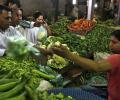
'If you see the composition of items which are causing this spike in prices, most of them have little to do with the kharif harvest, except for pulses and vegetables to some extent.' 'I don't know on what basis the government is claiming that food prices will moderate in the weeks to come.'
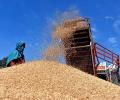
The government has no plans to import wheat as it has sufficient stocks to meet the country's requirements, official sources said. The Food Corporation of India (FCI) has enough stock for public distribution, they added. "There are no plans to import wheat into India. "The country has sufficient stocks to meet our domestic requirements," a source said.

Jaishankar also made it clear that it is in nobody's interest to see a country get into severe economic difficulties, and that too a neighbour.
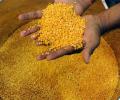
FCI's suspension of tur under MSP is likely to force farmers to undergo distress sales of the commodity.

Jhunjhunwala passed away early on Sunday morning due to a cardiac arrest, a source in his newly set up airline said.
The suicide note also stated about "foul language" used by people associated with a cooperative society and threat by lenders (finance firms), a police officer said on Monday.

The decision to increase the MSPs (Minimum Support Prices) was taken at a meeting of the Cabinet Committee on Economic Affairs (CCEA) chaired by Prime Minister Narendra Modi. MSP is the rate at which the government buys the grain from farmers. Currently, the government fixes MSPs for 23 crops grown in both kharif and rabi seasons. Sowing of rabi (winter) crops begins from October immediately after the harvest of kharif (summer) crops.

Now, government is also contracting imports.
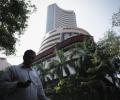
The broader NSE Nifty struggled before ending well above the 10,500-mark.

Real reason for crashing gold prices is not Trump victory, says expert.
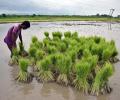
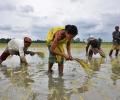
Trade and market players have already started factoring in at least 10 million tonnes drop in production in rice in the kharif season as compared to last year due to delayed sowing.
Foodgrains production in 2020-21 is projected to be a record 144.52 million tonnes, which is 0.80 per cent more than the production in 2019-20.

Earlier in the day, Delhi Chief Minister Arvind Kejriwal also wrote to Prime Minister Narendra Modi over vaccine shortage, saying the Centre should share the vaccine formula of the two manufacturers with other capable pharmaceutical companies to scale up production in the country.

Earning woes drag markets lower; TCS, HUL lead fall.

Such a high level of WPI was last recorded in October 2012, when inflation was 7.4 per cent.
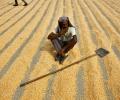
Recommends delisting of chana futures, open to lowering sugar import duty

Vasan Bala's Cinema Marte Dum Tak shines the spotlight on Vinod Talwar, Dilip Gulati, Kishan Shah and J Neelam. All of them are articulate, witty, and expressive -- talking of their passion for films, the rise and fall of their cinema, observes Deepa Gahlot.
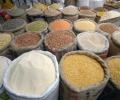
Mahindra and Mahindra's (M&M) agri business division has forayed into branded pulses space with NuPro brand.

Attacking critics, he said a "clique" of people exploited farmers for long as they remained in shackles of rules regulating the sale of their produce and stated that this needed to change, which his government has done.

'If it weren't for Om Puri, a whole range of our big city experiences wouldn't have found their honest representations on the screen.'
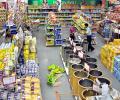
Reliance Retail has entered the Indian fast-moving consumer goods space as it takes its private label brands, sold at its supermarkets and hypermarkets, Reliance Fresh and Reliance Smart, to general trade. The company had internally set a target of Rs 50,000 crore turnover from the FMCG business, which will fall under Reliance Retail's consumer brand division. Business Standard accessed a presentation which includes the brands it has taken to the general trade.
